
Top Challenges in FMCG Distribution: Smart Strategies for Better Supply Chain Management
What Is FMCG Distribution?
FMCG distribution involves transporting fast-moving consumer goods from the manufacturer to the wholesaler, and from the wholesaler to the retailer and then to the consumer. Distributors must be quick, accurate, and consistent as these products are sold in volume and move fast.A well-managed distribution process can result in a variety of benefits for businesses, including improved customer relationships, better inventory management, faster delivery times, and reduced costs. The repercussions of its breakdown are a quick financial and reputational cost.
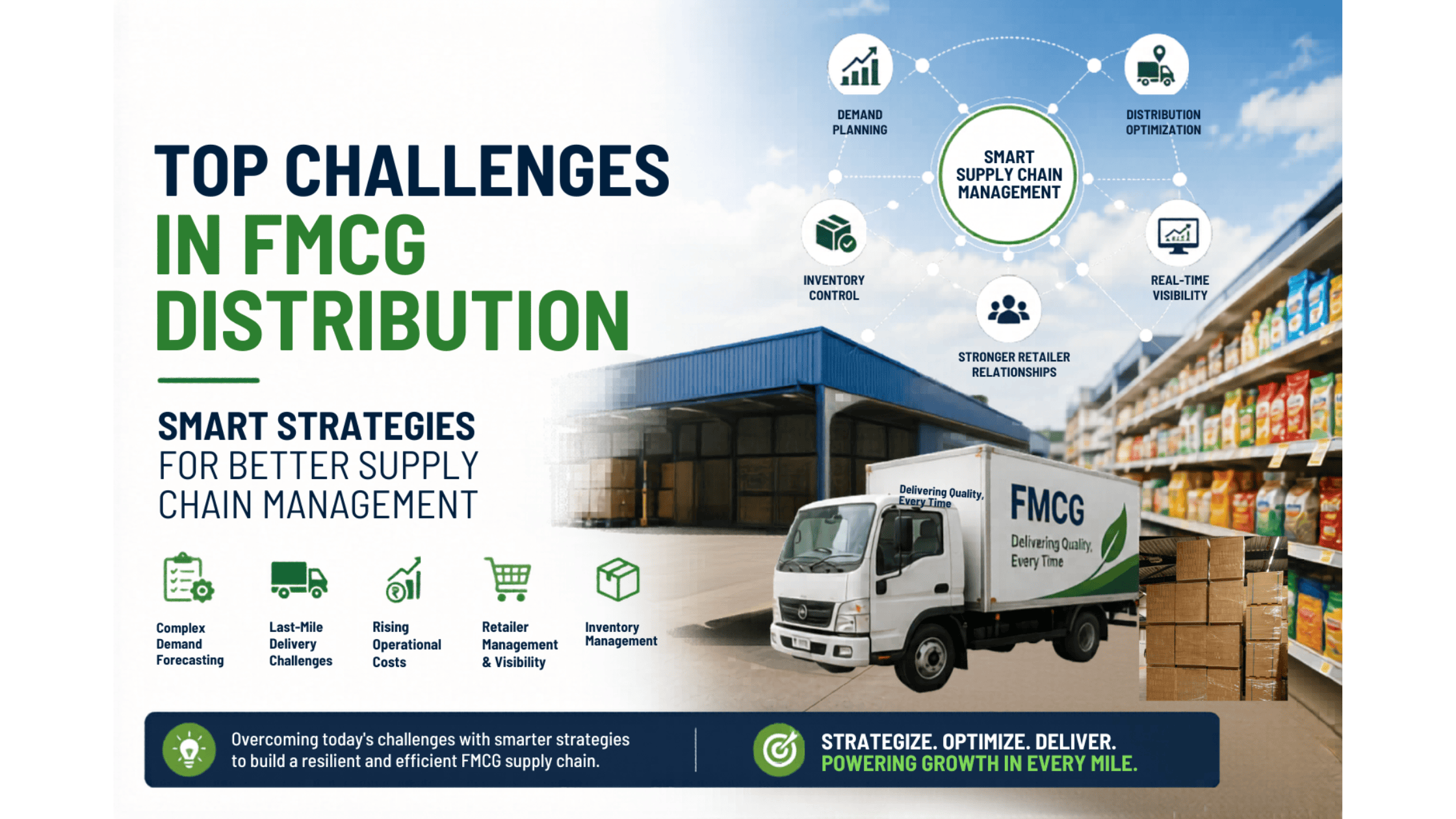
Top Challenges in FMCG Distribution
1. Inventory Management
Excessive stock in the warehouse leads to inflated stock holding costs and product expiry. Too low results in sales loss and discontented retailers. One of the most-constant challenges in the industry is finding the right balance.
2. Supply Chain Delays
A late truck, an unreliable supplier, an unexpected disruption — any of these can ripple through your entire supply chain. And the damage isn't just operational. When retailers can't count on you for consistent delivery, trust erodes quickly.
3. Rising Transportation Costs
Fuel prices aren't stabilizing anytime soon, and logistics expenses keep climbing. For distributors already working on tight margins, transportation costs are a constant pressure.
4. Demand Forecasting
Consumer buying habits shift constantly. What sold well last season may slow down this quarter. Sudden market trends or promotions can create demand spikes that catch distributors off guard.
5. Lack of Real-Time Visibility
When teams are working from manual spreadsheets or disconnected systems, information gaps are inevitable. Decisions get made on outdated data, and by the time a problem is spotted, it has already grown.
6. Managing Retailer Relationships
Retailers are not only customers, but long-term partners as well. They won't hesitate to look elsewhere if they are always looking for updates, inconsistent stocks, or poor service.
7. Product Expiry and Wastage
The shelf lives for many FMCG are short. Expanding stock that has expired in a warehouse – it's pure loss of money each and every time that you experience poor stock rotation.
Smart Strategies for Better FMCG Distribution
It is important to address individual issues, but it is the distributors who are truly successful in creating smarter systems from scratch that stand out. In practice that means:
Adopt Automation – Automate billing, orders and inventory alerts. This will allow your team to save time from repetitive tasks and concentrate on human decision making.
An organized and efficient warehouse is not a show place, but it pays off – less picking mistakes, quicker turnaround and smoother operations during the busy season.
Data-Driven Decisions: Businesses that use data regularly will make better decisions than those that make decisions based on gut instinct, whether they are identifying trends in demand early on or deciding which delivery routes are too expensive.
Loyalty is created through faster and more accurate deliveries with Customer Satisfaction First. Customers' loyalty is priceless.
Build strong supplier relationships: A good relationship between you and your suppliers is like insurance, you may never have to use it, but when times get tough, it's what keeps your operation going.
Why Technology Is No Longer Optional
Many FMCG distributors were operating at the time with spreadsheets, phone calls and manual processes several years ago. It is not so easy to maintain in the competitive market these days.
Modern tools such as inventory management software, ERP systems, GPS tracking, AI-driven demand forecasting, and sales force automation are more readily available than ever. Companies that implement them are not only becoming more efficient, but they're out in front of other businesses that haven't made the change.
Conclusion
FMCG distribution comes with real challenges — inventory imbalances, transportation costs, supply delays, demand unpredictability. But none of these are unsolvable problems. They have well-established solutions, and the technology to implement them is widely available.
The businesses that invest in smarter systems, build strong supplier and retailer relationships, and let data guide their decisions are the ones that will grow sustainably as the market expands.