
Last-Mile Delivery Challenges and How Technology Solves Them
In today’s fast-paced, customer-driven market, businesses are under constant pressure to deliver products quickly, accurately, and cost-effectively. While supply chains have become more advanced, the last mile—the final step of delivering goods to customers—remains the most complex and expensive part of the logistics journey.
Understanding Last-Mile Delivery Challenges is essential for businesses aiming to improve efficiency, reduce costs, and enhance customer satisfaction. Let’s explore the key challenges and how modern technology is transforming last-mile logistics.
What is Last-Mile Delivery?
Last-mile delivery refers to the movement of goods from a distribution center or warehouse to the end customer. Despite being the shortest leg of the journey, it accounts for over 50% of total shipping costs.
Top Last-Mile Delivery Challenges
1. High Delivery Costs
Fuel expenses, labor costs, and inefficient routing significantly increase last-mile delivery costs. Frequent small deliveries further add to operational inefficiencies.
2. Traffic Congestion & Urban Complexity
Urban areas are often congested, making timely deliveries difficult. Narrow streets, parking issues, and unpredictable traffic delays slow down operations.
3. Failed Deliveries
Missed deliveries due to customer unavailability lead to repeated attempts, increasing costs and reducing efficiency.
4. Lack of Real-Time Visibility
Without real-time tracking, businesses struggle to monitor deliveries, leading to poor communication and dissatisfied customers.
5. Inefficient Route Planning
Manual route planning often results in longer delivery times, higher fuel consumption, and lower productivity.
6. Customer Expectations
Customers now expect same-day or next-day delivery with real-time updates, putting additional pressure on logistics teams.
How Technology Solves Last-Mile Delivery Challenges
1. Route Optimization Software
Advanced algorithms analyze traffic, weather, and delivery locations to create the most efficient routes, reducing fuel costs and delivery time.
2. Real-Time Tracking & Visibility
GPS-enabled systems allow businesses and customers to track deliveries in real time, improving transparency and trust.
3. Automated Dispatching
Automation tools assign deliveries to drivers based on location and availability, ensuring faster and smarter dispatching.
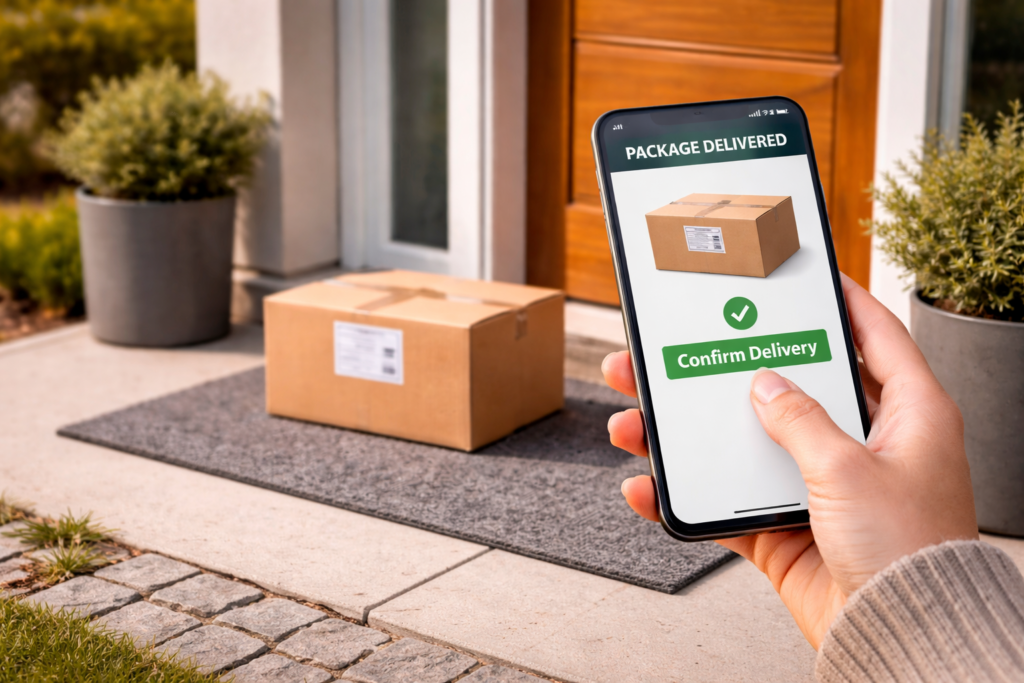
4. Electronic Proof of Delivery (ePOD)
Digital signatures, photos, and timestamps confirm successful deliveries, reducing disputes and improving accountability.
5. AI & Predictive Analytics
AI helps forecast demand, optimize delivery schedules, and predict potential delays, enabling proactive decision-making.
6. Mobile Apps for Drivers
Driver apps provide route guidance, delivery updates, and communication tools, improving productivity and reducing errors.
Benefits of Technology-Driven Last-Mile Delivery
- 🚀 Faster delivery times
- 💰 Reduced operational costs
- 📍 Improved route efficiency
- 😊 Enhanced customer satisfaction
- 📊 Better data insights and decision-making
Future Trends in Last-Mile Delivery
The future of last-mile logistics is being shaped by innovation:
- Drones and Autonomous Vehicles for faster delivery
- Micro-fulfillment centers in urban areas
- Sustainable delivery solutions like electric vehicles
- AI-driven logistics platforms for smarter operations
Conclusion
Overcoming Last-Mile Delivery Challenges is no longer optional—it’s a necessity for businesses that want to stay competitive. By leveraging modern technologies like route optimization, real-time tracking, and AI-driven insights, companies can streamline operations, reduce costs, and deliver exceptional customer experiences.
Businesses that invest in smart logistics solutions today will be the leaders of tomorrow.